Anandtara Whitefield, Commercial Building, Keshav Nagar, Pune

Mon to Sun Available 24/7

Hernia Treatment in Keshav Nagar, Pune

Advanced minimally invasive hernia treatment for long-term relief.
Years Clinical Experience
5 +
Emergency Medical Care
24/ 7
Reviews
5000 +
Google Reviews
2.5 +

Why Choose Vighnaharta Hospital for Hernia Treatment in Keshav Nagar, Pune?

Vighnaharta Hospital is known for offering reliable and advanced hernia treatment in Keshav Nagar, Pune, with a focus on patient safety and comfort.

The hospital is equipped with modern laparoscopic technology, experienced surgeons, and a dedicated care team. Patients benefit from personalized treatment plans, minimal hospital stay, and comprehensive post-operative support.
Vighnaharta Hospital Top Multispecialty Hospital in Keshavnagar

What is a Hernia?

What is a Hernia?

A hernia is a condition in which an internal organ or tissue pushes through a weak area in the surrounding muscle or connective tissue, most commonly in the abdominal wall. It usually appears as a bulge that becomes more noticeable when coughing, straining, or lifting heavy objects. While hernias can develop in different areas, they are mostly seen in the abdomen and groin regions.

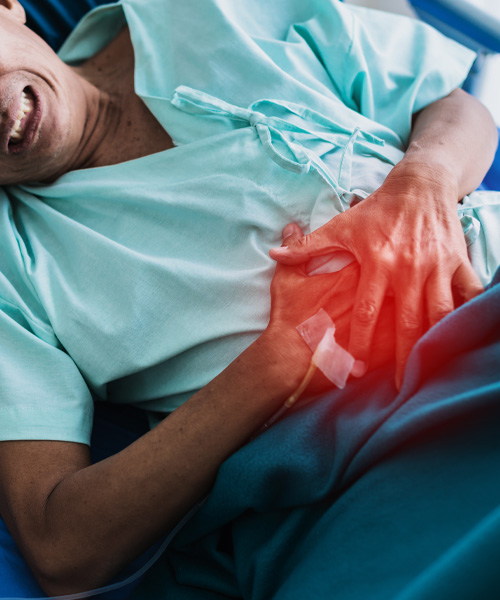
Hernias do not heal on their own and worsen gradually if left untreated. In the early stages, they may be painless, but over time, they can cause discomfort, pressure, or a dragging sensation. In some cases, complications like obstruction or strangulation can occur, where the blood supply to the affected tissue is cut off, making it a medical emergency.

Seeking timely treatment for a hernia in Keshav Nagar, Pune, at Vighnaharta Hospital helps avoid complications. With advancements like laparoscopic hernia repair, treatment has become safer, less invasive, and associated with quicker recovery and minimal scarring.

Types of Hernia
Hernias can occur in different parts of the body, and identifying the type helps in planning the right hernia treatment. The different types include:

  • Inguinal hernia: The most common type, seen in the groin when tissue pushes through a weak abdominal wall. It is seen more frequently in men and usually requires surgery.
  • Umbilical hernia: Develops around the navel, commonly seen in infants and adults with obesity or after pregnancy, appearing as a soft bulge.
  • Hiatal hernia: Occurs when part of the stomach moves into the chest through the diaphragm, leading to acid reflux and heartburn.
  • Incisional hernia: Forms at the site of a previous surgery due to weakened muscles, especially if healing was incomplete.
  • Femoral hernia: Appears near the upper thigh, is more common in women, and carries a higher risk of complications if untreated.
  • Epigastric hernia: Occurs in the upper abdomen between the chest and navel, presenting as a small lump with mild to moderate pain.

Causes and Risk Factors of Hernia

Causes and Risk Factors of Hernia

Hernias occur due to muscle weakness combined with increased abdominal pressure. Common factors that increase the risk of developing a hernia include:

  • Congenital weakness: Some individuals are born with weak abdominal walls, making them more prone to hernia development.
  • Aging: Muscles naturally weaken over time, increasing the risk of hernias in older adults.
  • Heavy lifting: Frequent lifting without proper technique increases strain on the abdominal wall.
  • Chronic cough: Persistent coughing due to smoking or lung conditions puts repeated pressure on abdominal muscles.
  • Obesity: Excess body weight adds continuous stress on the abdominal wall.
  • Pregnancy: Increased abdominal pressure, especially in multiple pregnancies, can lead to hernia formation.
  • Constipation: Straining during bowel movements weakens abdominal muscles over time.
  • Previous surgeries: Surgical incisions may create weak spots, leading to incisional hernias.
  • Smoking: Affects tissue strength and healing, increasing susceptibility.
  • Fluid accumulation (ascites): Increased pressure in the abdomen can contribute to hernia formation.

Symptoms of Hernia

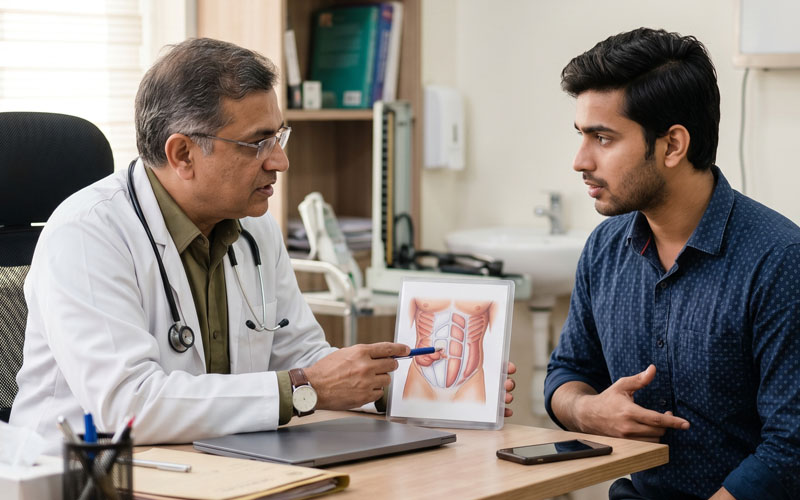
Hernia symptoms can vary depending on the type and severity. At Vighnaharta Hospital, our skilled hernia specialist in Keshav Nagar, Pune, will assess the symptoms carefully to create a personalized treatment plan for the patient. Common symptoms include:

  • Visible bulge: A noticeable lump in the abdomen or groin that becomes more prominent while standing, coughing, or straining.
  • Pain or discomfort: Mild to sharp pain, especially during physical activity, lifting, or prolonged standing.
  • Heaviness or pressure: A dragging or heavy sensation in the affected area.
  • Burning or aching sensation: Localized discomfort near the bulge that may worsen over time.
  • Swelling: The bulge may reduce when lying down but reappear on activity.
  • Digestive symptoms: In a hiatal hernia, symptoms like heartburn, acid reflux, and difficulty swallowing are common.
  • Nausea or vomiting: May occur in more severe cases, especially if the intestine is involved.
  • Sudden severe pain: A sign of complications like strangulation, requiring immediate medical attention.

Vighnaharta Hospital is the best hernia hospital in Keshav Nagar, where diagnosing a hernia involves the following tests:

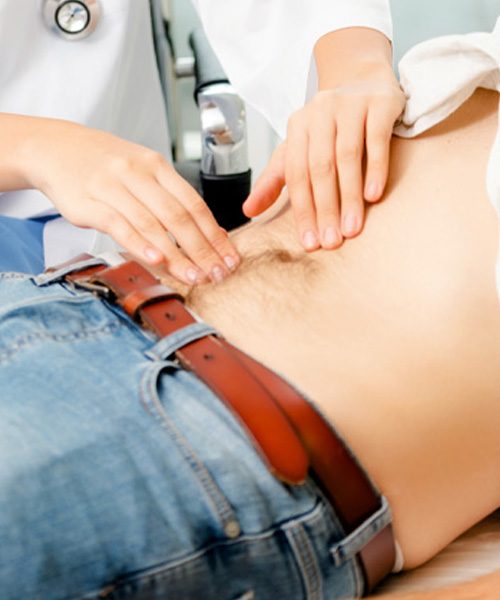
  • Physical examination: The doctor checks for a bulge and may ask you to cough or strain to see if it becomes more prominent.
  • Medical history: Symptoms, duration, and past surgeries are reviewed to understand possible causes.
  • Ultrasound: A probe is moved over the abdomen or groin to create real-time images and detect the hernia.
  • CT scan: The patient lies in a scanner that takes detailed cross-sectional images to locate and evaluate the hernia.
  • MRI scan: Uses magnetic fields to produce detailed images of soft tissues, helpful in complex cases.
  • Endoscopy: A thin flexible tube with a camera is inserted through the mouth to examine the esophagus and stomach, mainly for a hiatal hernia.
  • Diagnostic laparoscopy: A small camera is inserted through a tiny incision to directly view the hernia internally in rare cases.

Hernia symptoms can vary depending on the type and severity. At Vighnaharta Hospital, our skilled hernia specialist in Keshav Nagar, Pune, will assess the symptoms carefully to create a personalized treatment plan for the patient. Common symptoms include:

  • Visible bulge: A noticeable lump in the abdomen or groin that becomes more prominent while standing, coughing, or straining.
  • Pain or discomfort: Mild to sharp pain, especially during physical activity, lifting, or prolonged standing.
  • Heaviness or pressure: A dragging or heavy sensation in the affected area.
  • Burning or aching sensation: Localized discomfort near the bulge that may worsen over time.
  • Swelling: The bulge may reduce when lying down but reappear on activity.
  • Digestive symptoms: In a hiatal hernia, symptoms like heartburn, acid reflux, and difficulty swallowing are common.
  • Nausea or vomiting: May occur in more severe cases, especially if the intestine is involved.
  • Sudden severe pain: A sign of complications like strangulation, requiring immediate medical attention.

If not treated on time, a hernia can lead to serious complications, including:

  • Strangulation: The blood supply to the herniated tissue gets cut off, leading to tissue death. This is a medical emergency and requires immediate surgery.
  • Obstruction: A part of the intestine may get trapped, causing blockage, severe abdominal pain, nausea, and vomiting.
  • Increase in size: Hernias tend to enlarge over time, making them more difficult to treat and increasing surgical complexity.
  • Chronic pain and discomfort: Persistent pain can interfere with daily activities and reduce quality of life.
  • Inflammation: The herniated tissue may become swollen and tender, leading to discomfort.
  • Infection: In complicated cases, especially if strangulated, there is a risk of infection.
  • Recurrence: Improper repair or delay in treatment may increase the chances of the hernia coming back even after surgery.

At Vighnaharta Hospital, timely diagnosis and interventions, including effective hernia surgery in Keshav Nagar, Pune, ensure reduced risk of complications.

The hernia treatment cost in Keshav Nagar, Pune, generally ranges from INR 30,000 to INR 1,50,000 or more, depending on the type of surgery and patient-specific factors, including:

  • Type of surgery: Laparoscopic hernia repair in Pune usually costs more than open surgery, but offers quicker recovery and less pain.
  • Severity of hernia: Complex or large hernias may require advanced surgical techniques, increasing cost.
  • Hospital infrastructure: Modern facilities and technology can influence overall pricing.
  • Surgeon’s experience: Highly skilled specialists may have higher consultation and surgical fees.
  • Diagnostic tests: Pre-operative investigations, like imaging and blood tests, add to the total cost.
  • Hospital stay: Duration of admission and room type impact expenses.
  • Post-operative care: Medicines, follow-ups, and recovery support are included in the total cost.
  • Insurance coverage: Many procedures are covered under health insurance, reducing out-of-pocket costs.

At Vighnaharta Hospital, patients receive high-quality yet affordable hernia treatment with transparent pricing and comprehensive care.

While not all hernias can be prevented, adopting healthy lifestyle habits can significantly reduce the risk and help maintain strong abdominal muscles. Ways to prevent hernia include:

  • Maintain a healthy weight: Excess body weight increases pressure on the abdominal wall, so maintaining an ideal weight helps lower the risk.
  • Avoid heavy lifting: Use proper lifting techniques and avoid lifting objects that are too heavy to prevent strain.
  • Eat a high-fiber diet: Consuming fiber-rich foods prevents constipation and reduces straining during bowel movements.
  • Stay hydrated: Adequate water intake supports digestion and prevents constipation.
  • Quit smoking: Smoking leads to a chronic cough and weakens connective tissues, increasing hernia risk.
  • Exercise regularly: Strengthening core muscles improves abdominal support and reduces the chances of hernia formation.
  • Treat chronic cough promptly: Managing persistent cough reduces repeated pressure on abdominal muscles.
  • Follow post-surgery advice: Proper care and precautions after surgery help prevent recurrence of the hernia.

Meet Our Specialists

Get Expert Hernia Care at Vighnaharta Hospital

Consult experienced specialists at Vighnaharta Hospital for safe, advanced, and affordable laparoscopic hernia repair surgery in Keshav Nagar, Pune, with faster recovery and long-term relief.

Frequently Asked Questions

Hernia surgery usually takes about 30 to 90 minutes, depending on the type and complexity of the hernia. Laparoscopic procedures are usually quicker, and most patients can go home the same day or within 24 hours.

Recovery time after hernia surgery depends on the type of surgery performed. Most patients recover within 1 to 2 weeks after laparoscopic surgery, while open surgery may take longer. Patients are advised to avoid heavy lifting and strenuous activities during the recovery period.

Laparoscopic hernia surgery offers several advantages over open surgery, including smaller incisions, less post-operative pain, minimal scarring, and faster recovery. Patients usually experience shorter hospital stays and can return to daily activities sooner. It also reduces the risk of infection and ensures better overall cosmetic and functional outcomes.

Hernias cannot be permanently treated without surgery. Non-surgical methods, like lifestyle changes, supportive belts, or observation, may temporarily relieve symptoms, but the defect in the abdominal wall remains. Surgery is the only definitive solution to repair the hernia and prevent complications.

Hernia repair surgery is performed under anesthesia, so patients do not feel pain during the procedure. Post-surgery, mild to moderate discomfort may occur, which is usually managed effectively with medications. Laparoscopic surgery generally causes less pain and allows faster recovery compared to open surgery.

Most health insurance plans cover hernia surgery as it is considered a medically necessary procedure. The extent of coverage may vary depending on the policy, hospital, and type of surgery, so it is advisable to confirm details with the insurance provider beforehand.

Gynaecology

Urology

Critical Care Medicine

Joint Replacement

Pediatric Clinic

Emergency Cases

Please feel welcome to contact our friendly reception staff with any general or medical enquiry call us.

+91 8208612746

Opening Hours

Book Your Appointment


    Scroll to Top